| Thermal water resources in Hungary, their utilisation and protection |  |
THE STORY OF EXPLORATION, PRODUCTION AND UTILISATION OF THERMAL WATERS IN HUNGARY
After some starting steps of thermal water exploration in the ninetieth century the number of geothermal wells increased mainly in the course of the search for hydrocarbons in Hungary: instead of oil- or gas fields thermal water was found in many places (Hajdúszoboszló, Debrecen, etc.). Also drillings for drinking water explored thermal water in many places where good aquifers could not be found at smaller depth (mainly in the Lowland). Above these, larger municipalities in the areas of porous geothermal reservoirs drilled geothermal wells for balneological purpose. In the sixties of the past century the development of thermal water exploration gained a large impetus. The National Committee for Technical Development supported financially the construction of geothermal wells for
the purpose of agricultural or municipal heating. Economy of these developments was disputable shown also by the fact that after having stopped the financial support, the number of thermal water explorations of this purpose fell strongly.
The first thermal water explorations were made with cable tool rigs without the use of mud (to the completion of the thermal well Budapest-Városliget No.I eleven sections of casing were necessary). Similarly to the oil explorations in Hungary also the well drilling industry shifted later to the rotary system. Since the 50s the wells have been completed with this technology, usually with a 3-section casing and instead of the perforation-type screening more modern technologies have been applied. (screening technology is very important in this field since the Upper Pannonian aquifers are usually not consolidated sufficiently and their sandy material is inclined to enter the well.
As far as the time-pattern of thermal well construction is concerned in Hungary, it can be established that from the fifties a boom, in the sixties a peak, later a strong decrease can be experienced both in the number of wells and in the overall water production capacity.
According to the state of 01.01.2000 the number of registered wells yielding water of temperature higher than 30 o C is 1289.
Near the half of the wells yields water of temperature less than 40 o C, about one fourth of the wells yields water of temperature higher than 60 o C and only 4 per cent is the ratio of wells with water warmer than 90 o C (Table 1).
About one tenth of geothermal wells is already inferior, two tenth of them is provisionally closed up or is operated as observation well, a few serves the purpose of reinjection.
Not taking the above into account, the number of wells actually in operation can be estimated 840 (state 01.01.2000) according to the inventories, without on-site supervision.
Thirty per cent of the wells in operation is serving balneological purposes, however only a certain portion of them (81 according to official information of the time four years ago) has been declared as well producing medicinal water. According to the order of the Ministry for Public Health in force medicinal water is the mineral water that has a natural, medically proved curative power in the case of oral or external use. According to the same order, mineral water is the water that contains more than 1000 mg/l dissolved substances or in addition to 500-1000 mg/l dissolved solid content it contains certain components above specified concentration.
Thus the qualification of a medicinal water depends not only on the composition of the thermal water in point but also on the result of a qualification process taking basically medical aspects into account.
Qualified medicinal waters are mainly thermal waters and to a lesser extent cool waters being used for drinking cure and for bottling (Figure 3).
44 per cent of the thermal wells is serving agricultural, municipal, industrial heating, hot water supply and other purposes. The ratio of thermal wells of temperature lesser than 40 o C is significant mostly in the case of agricultural use where mainly water supply purposes are served also by the thermal wells of lower temperature. Industrial users are utilising the geological heat transported by thermal water mainly for the heating of their buildings or for technological purposes, however the particular chemical composition can support technology as well. The example in the oil mining is well known, where thermal water is injected in order to maintain the pressure in the reservoirs containing hydrocarbons (e.g. Algyő).
Table 1
Distribution of thermal wells according to their wellhead temperature
| (as on the 1 st January 2000) | |
| Temperature( o C) |
No. of wells |
Ratio% |
Utilisation (No. of wells) |
| B |
D |
A |
I |
M |
Mu |
R |
C |
O |
In |
30-39,9 |
581 |
42 |
59 |
183 |
72 |
29 |
1 |
9 |
0 |
84 |
40 |
101 |
40-49,9 |
283 |
20 |
91 |
22 |
16 |
17 |
2 |
20 |
0 |
36 |
45 |
27 |
50-59,9 |
132 |
11 |
45 |
7 |
17 |
10 |
2 |
14 |
4 |
13 |
12 |
7 |
60-69,9 |
121 |
10 |
32 |
0 |
17 |
6 |
1 |
25 |
7 |
18 |
3 |
10 |
70-79,9 |
70 |
7 |
8 |
0 |
23 |
4 |
6 |
16 |
2 |
8 |
2 |
1 |
80-89,9 |
50 |
5 |
4 |
0 |
33 |
3 |
2 |
1 |
0 |
6 |
1 |
0 |
90-99,9 |
48 |
5 |
4 |
0 |
31 |
1 |
5 |
0 |
0 |
5 |
0 |
2 |
>100 |
3 |
- |
0 |
0 |
1 |
0 |
1 |
0 |
0 |
1 |
0 |
0 |
Total |
1289 |
100 |
243 |
212 |
210 |
70 |
20 |
85 |
13 |
172 |
103 |
148 |
|
B – |
Bath, |
|
D – |
Drinking water supply, |
|
A- |
Agriculture, |
|
I – |
Industry, |
|
M – |
Municipal, |
|
Mu – |
Multipurpose, |
|
R – |
Reinjection, |
|
C – |
Closed up, |
|
O – |
Observation well, |
|
In – |
Inferior |
Number of thermal wells in operation: 840
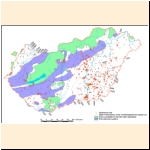 Figure3.Municipalites with qualified thermalwater
The utilisation of geothermal energy is the most significant in the field of agriculture in Hungary where horticultural and animal farms are heated with thermal water. In the Lower-Tisza Region agricultural plants of significant size even on a worldwide level are in operation based on geothermal energy.
In some cases thermal water is utilised in a complex way, unfortunately not in a sufficiently widespread manner. In certain places the thermal energy of hot water is being decreased first in heating radiators, then the water for domestic use is being heated up with it, and in the third step it is conducted into underfloor heating systems or swimming pools (e.g. Szentes, Hódmezővásárhely, Szeged, etc.). In the same places one can find the example of complex agricultural and municipal use: the cooled water released from horticultural- or remote heating plants is being used in baths, polythene greenhouses or in the maintenance of the pressure of hydrocarbon reservoirs.
The majority of these thermal water utilisation systems has been built in the years 1965 to 1968 and their technical state and efficiency are representing the level of those years, i.e. it is rather low.
Updating of the above mentioned systems has been implemented only in few cases at the lack of the necessary capital.
Heat-loss of the thermal water utilisation systems is unwarrantedly high and it is connected many times with the wasting of water. Geothermal wells are kept in operation continuously with high production even in the intervals when not the whole quantity of water is needed. Being the utilisation systems out-of-date, the utilised heat-range varies between 20 to 25 o C.
A good example of operation since a long time is the multi-stage thermal water utilisation system of the hospital in Szentes, where the thermal energy of the water released from the hospital buildings is used also in the official quarters and in the municipal bath. The system of the horticultural and animal farms of the Árpád Cooperative in Szentes is a well controlled one from the point of view of heat utilisation, where the stepwise release of heat (from 80-90 o C to 20-30 o C) is realised in their space- and soil-heating.
A guiding case is the Geothermal Public Utilities Hódmezővásárhely, which supplies the remote heating of flats and public institutions with water of 80 o C, one part of the released cooled water is transferred to the municipal bath and the other is being reinjected into a 1700 m deep well. Above this additionally warming the 40 o C hot water of the 1300 m deep well of the system the population is supplied directly with hot water for domestic use, saving this way the water resources of the municipality. Using thermal waters of drinking water quality directly in domestic hot water supply seems also a promising way of utilisation. For example in the northern quarter of Szeged the 52 o C hot water of two thermal wells is used directly as domestic water without additional heating.
There is an example also in the Transdanubian Region of Hungary: in the bath of Harkány earlier the 3000 m 3 /d water of 62 o C was cooled down without energy utilisation to 30-35 o C as usual in the pools and after having used it was released to the relevant canal. As a result of updating a heat pump geothermal energy production system of 4,5 MW has been constructed and nowadays this small power plant supplies the buildings of the baths, a number of public institutions, homes and hotels of Harkány with thermal energy. Undoubtedly, a consequence of this development has been that the yearly thermal water production increased as the production should be maintained even in wintertime when the water demand of the bath is smaller.
More than ¼ of the geothermal wells in operation in Hungary with the temperature of less than 40 o C are used in the water supply systems. It occurs mainly in the Lowland region that at the lack of other possibility of water abstraction, thermal wells of 40-60 o C temperature are being utilised in the drinking water supply of the population, mixing their water with the cooler water of other wells.
There are only uncertain data on the actual rate of thermal water production since the measuring facilities are lacking at many places. In the last years the average production can be estimated as 340 thousand m 3 /d. The portion of water originating from the karstic reservoirs is 80 thousand m 3 /d together with the flow of the Hévíz lake.
In 1996 an approximative survey was implemented using the data of the Regional Water Authorities extended over 900 thermal wells in operation. According to the survey nowadays only less than half of the wells is operating upon their own wellhead pressure, more then half of them is operated by pumps (there were no data on the rest of the wells). A great part of them is submersible pump and about half of the latter yields cool water in accordance with the fact that near the half of the wells is of the temperature lower than 40 o C. In a few cases centrifugal pumps are used. In a few of the hot water producing wells lineshaft type pumps are applied. Compressor is being used in a few cases only. With the decrease of portion of pressure-operated (positive) wells and parallel to the extension of pumping the risk of stoppage decreased as well (in the case of positive wells at the decrease of flow or when stopping the production the well can become negative and can be restarted only with compressor).
Inclination for scaling is reported in the case of about one quarter of the wells, however this is a great problem in the case of a fraction of the wells only (mainly in the case of the wells tapping confined carbonate reservoirs like in Zalakaros and Mezőkövesd). For the prevention of scaling inhibitors are introduced in the most cases, the introduction of cool water and the application of magnetic procedures are occurring in a few cases only. In some cases application of closed loop under pressure is mentioned for the prevention of scaling.
In the case of more than three quarter of the thermal wells water contains some gas. Degassing takes place at somewhat more than the half of the wells only.
In the course of the survey also the possibilities of measurements were studied. According to the outcomes pressure gauges are installed for the measurement of the wellhead pressure unfortunately only at the quarter of the wells, other facility as access for water level monitoring or observation pipe can be found at the half of the them. Yield is measured with flow meter at near the half of the wells: this is the case at the wells producing cooler water for drinking water purposes. Cubage is mentioned in the case of a quarter of the wells and the number of the wells without measuring facilities is significant. In many cases there is even no sampling tap in the nearby of the well. Sampling and chemical analysis is impeded many times by the use of compressor and the chemicals being continuously added to prevent scaling. Downhole measurements are possible only dismantling the wellhead in many cases.
At the time being there are only very few information on the actual operation of thermal wells in the country at the lack of comprehensive surveys.
|

