| Thermal water resources in Hungary, their utilisation and protection |  |
REGIONAL DECREASE OF THE PRESSURE IN THE GEOTHERMAL RESERVOIRS AND ENVIRONMENTAL IMPACTS
Fissured carbonate bedrock aquifers Near the natural thermal water occurrences and/or springs there were drilled many times wells to gain more water. However natural flow coming to the surface can not be increased without consequences. Such new wells at the beginning decreased only the flow of the springs and caused local fall of the pressure only.
Rearrangement of the tappings caused cooling and also changes in water quality at the springs where the intervention changed the ratio of mixing waters of different quality and temperature (e.g. in Budapest at the Lukács bath). Operation of the wells drilled near the natural thermal springs usually decreases the flow of the spring. In order to restore or increase the original flow, the operators often shift to the operation with pumping. Thus the flow of the spring produced with the pumps and wells can exceed the rate of recharge; thus causing already a long term decrease of the pressure.
After having the pressure-decrease ensued, the cooler (and maybe polluted) waters of the surroundings start to move towards the spring causing the cooling and the pollution of its water. Such processes were taking place in the case of some springs in the Budapest thermal-karstic system.
The situation was worsened by the great concentrated abstractions accomplished mainly in the interest of the security of mining industry in the Transdanubian Middle Range which represents the recharge area of these springs. They were near the Capital in the region of Dorog, Tatabánya, Mány, Nagyegyháza and Csordakút while in the neighbourhood of Hévíz in the Nyírád region. These abstractions were tapping the cool karstic reservoirs being in hydraulic connection with the warm thermalkarstic system and deteriorated the pressure-state of the springs at the edge of the mountains.
In this deterioration, in addition to the interventions mentioned above, also the drinking water and medicinal abstractions nearby the springs had certain role together with the lack of precipitation and infiltration of the 80s. The abstractions of mining industry were stopped in the meantime, however the regeneration of the karstic system requires several decades.
Similarly in the regions of Harkány and Eger certain problems are caused by the overexploitation of drinking water from the cool karstic water reservoir being in connection with the thermal water reservoir.
Thermalkarstic systems are the most sensitive regions of the karstic systems; in many cases their protection is determining the management with the karstic waters of the whole reservoir.
Porous (clastic) geothermal reservoirs of basins The porous thermal water reservoirs of the basins are in a looser connection with the recharge sources than the thermalkarstic reservoirs mentioned above. In the latter, naturally greater fall of pressure is ensuing as the consequence of thermal water withdrawal. The deeper and more confined is the reservoir, the greater the decrease of pressure.
In the basin-located thermal water reservoirs a decrease of 10 m as an average, however in several places already larger than 50 m decrease can be experienced as a consequence of the production up to now. This decrease significantly reduced, sometimes even stopped the production by wellhead pressure.
The recharge of the not entirely confined geothermal reservoirs comes through the shallow sand layers, after all from the surface waters or ground waters, similarly to the porous reservoirs. Thermal water production in Hungary significantly exceeds the rate of recharge in the great part of the basin-like areas of the country. This means that as a consequence of pressure decrease much more water moves downwards from the surface zone to the thermal water reservoirs than earlier, and parallel to this the upwards movement in the discharge areas stopped. Where the production of thermal water is larger than the recharge from the surface, there an enduring decrease of the pressure and fall of water level starts. Indications of this can be experienced in the Duna-Tisza region where a cause of the lasting fall of the water level may be the thermal water production in the Southern Lowland. However the main cause can be found in the dry weather (in the last years of more precipitation the fall has stopped) and in the drinking water abstractions from the shallow layers.
Because of the vertical hydraulic connections the maintenance of the household of shallow groundwater can be a limit of the production from the deeper layers (thermal water production included) also in other regions.
Where thermal water reservoirs are isolated from the overlaying cool water containing layers, this environmental impact does not appear. However in such areas the decrease of pressure can be significant and long-lasting because of the lack of recharge.
As a consequence of the regional and local pressure decrease the wellhead pressure of the new thermal wells decreased continuously and the ratio of the wells the static levels of which did not rise above the ground level even at the beginning, increased. Already less than the half of the wells drilled after 1985 was positive. The original static level of several times 10 m above the ground level of the wells drilled earlier decreased at many places to such an extent that they can be operated only with pumps or compressors (Figure 4). The pressure decrease in thermal water reservoirs can be traced also in the observation wells (Figure 5).
As a result of the periodic supervision of the thermal wells it can be stated that in the Lowland region during the 70s and 80s the pressure decrease was
- from 0,2 to 0,6 m (0,4 m as an average) in the thermal water reservoirs of the depth less than 500 m,
- from 0,3 to 1,1 m ( 0,6 m as an average) at the depths 500 to 1000 m,
- from 1 to 2 m as an average in the wells of the depth larger than 1000 m.
Yearly decrease of 0,5 m could be experienced in the thermal wells in the Transdanubia as well.
Pressure changes in the last decade
The rate of pressure-fall decreased in the last decade because of the reduction of water production (cool, lukewarm and thermal waters).
The changes in the pressures and flow of thermal waters in the hill-foot areas can not be studied without the cool karstic water systems being in connection with them. The pressure decrease in the Budapest and Hévíz karstic water system stopped at the beginning of the 90s which can be a consequence of closing up the mines and of the reduction of the abstractions of mining industry.
At the time being the discharge of the Hévíz-lake displays a rising trend together with the water levels in the surroundings in accordance with the forecasts made in 1989, and the levels of karstic water are rising in the Budapest thermalkarstic system as well (Figure 6).
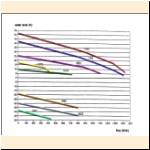 Figure 4. Variations of the wellhead pressures in Szeged ,Székelysor
(By Dr Török J.) 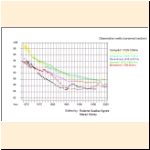 Figure 5. Pressure change in the geothermal reservoir in the Hungarian
Lowland -area 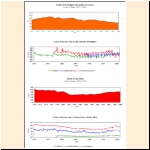 Figure 6. Changes of flow and levels in the Budapest and Hévíz thermalkarstic system
(by András Csepregi)
|

